
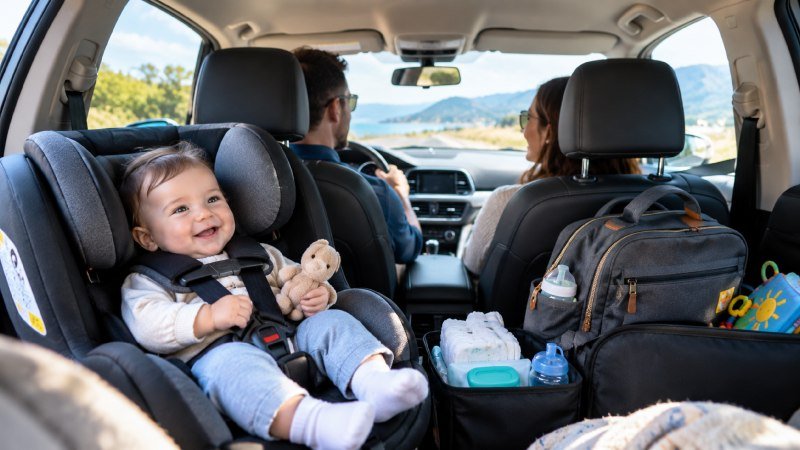
The first time you load a baby into the car for a real road trip — not just a quick trip across town, but hours on the highway — it can feel like preparing for an expedition. There’s the diaper bag, the extra outfits, the snacks, the toys that will supposedly buy you fifteen minutes of peace, and the nagging feeling that you’ve forgotten something important.
Most parents who’ve done a few of these trips will tell you the same thing: it gets easier once you stop trying to control everything and start planning around your baby’s actual rhythms instead of your own road-trip fantasy. A drive that might take four hours without kids can easily take six or seven with one, and that’s fine. The goal isn’t speed. It’s getting everyone there calm, fed, and reasonably rested.
Here are ten practical, road-tested tips that can make traveling with a baby by car smoother, for the baby and for the adults in the front seat.
1. Plan Your Route Around Naps, Not Mileage
Before you map out gas stations and rest stops, map out your baby’s sleep schedule. Many families find it easiest to time the longest stretch of driving around a nap window, so the baby is asleep for the hardest part of the trip instead of awake and fussing in traffic.
If your baby usually naps mid-morning, consider leaving early enough that you’re on the road when that nap would naturally happen. It won’t always go perfectly, but building your schedule around your baby’s patterns — rather than forcing your baby to adjust to your itinerary — tends to reduce meltdowns significantly.
Build In Buffer Time
Whatever your GPS says the drive will take, add at least 25 to 50 percent more time, especially for trips longer than two hours. Diaper changes, feeding breaks, and the occasional “we just need five minutes to let her calm down” stop all add up. Trips with a baby aren’t about efficiency; they’re about not rushing an already tired kid.
2. Pack a Diaper Bag That Works From the Driver’s Seat
You want a diaper bag that a passenger can dig through without unbuckling, and ideally one you could reach into yourself if you’re driving solo and pull over. Keep the essentials in the top layer: diapers, wipes, a change of clothes, and a small trash bag for dirty diapers so they’re not sitting loose in the car.
A second, smaller bag just for the car, separate from your main diaper bag, can also help. Fill it with just enough supplies for a few hours, so you’re not unpacking your entire diaper bag every time you stop.
Keep a “Just in Case” Kit Nearby
A gallon-sized bag with a spare onesie, extra wipes, a burp cloth, and a plastic bag for soiled clothes should live within arm’s reach of whoever’s sitting next to the baby. Car sickness, blowout diapers, and spilled bottles happen, and having this kit ready means you’re not stopping the car to dig through luggage in the trunk.
3. Choose Snacks and Bottles With the Car in Mind
If your baby is on solid foods, pick snacks that are easy to eat one-handed and won’t create a huge mess if dropped — think puffs, small crackers, or soft fruit pieces in a spill-proof container. Avoid anything that requires cutting or careful handling while the car is moving.
For younger babies still on bottles or breastfeeding, plan feeding stops the same way you plan naps: around your baby’s actual hunger cues, not a rigid schedule. If you’re bottle-feeding, pre-measuring formula into individual containers before the trip saves you from mixing bottles at a rest stop with a screaming baby in the back seat.
Never Feed a Bottle to a Baby While the Car Is Moving
This one’s worth repeating because it’s easy to underestimate the risk. Feeding a baby a bottle while they’re reclined in a car seat, especially while the vehicle is in motion, increases the risk of choking. Pull over completely for feedings, even if it costs you ten extra minutes.
4. Make the Car Seat as Comfortable as It Is Safe
Car seat comfort matters more on long trips than people expect. Before you leave, double check that the harness straps aren’t twisted and that the chest clip sits at armpit level, not the stomach. A baby who’s uncomfortable in their seat will let you know, loudly, somewhere around mile forty.
Dress your baby in layers rather than a bulky snowsuit or heavily padded outfit, since thick padding under the harness can compress in a crash and make the straps less effective. If it’s cold, put a blanket over the baby after they’re buckled in instead of bundling them up first.
Watch the Temperature Inside the Car
Cars heat up fast, even with the windows cracked, and they can also get colder than expected on long overnight drives. Check on your baby’s temperature by feeling the back of their neck rather than their hands, which are often cooler even when the baby is perfectly comfortable.
5. Rotate Entertainment Instead of Overloading the Car
It’s tempting to pack every toy your baby owns, but a car seat only has so much space, and too many options can actually overwhelm a baby rather than entertain them. Instead, pack four or five items and rotate them throughout the trip, introducing a “new” toy every 30 to 45 minutes.
Soft books, small mirrors that clip to the headrest so the baby can see themselves, and simple textured toys tend to hold attention longer than anything with lots of small parts. For older babies and toddlers, a few favorite songs on a playlist can double as both entertainment and a calming routine.
Save One Toy for Emergencies
Keep one toy or item that your baby genuinely loves out of the regular rotation entirely, saved for moments of real distress. When everything else has failed and you’re still fifteen minutes from the next exit, that one surprise item can buy you just enough time.
6. Keep the Cabin Organized So You Can Find Things Fast
A messy car makes every stop take longer and every meltdown more stressful because you’re rummaging for a pacifier while your baby is upset. Use hanging organizers on the back of the front seats to keep snacks, wipes, and toys visible and within reach of whoever’s sitting with the baby.
Designate specific spots for specific things — diapers always in one pouch, toys always in a particular bin, trash always in a bag clipped to a seat back — so that anyone in the car, including a tired co-parent or grandparent, can find what they need without asking.
Do a Mid-Trip Reset
At your longer stops, take two minutes to tidy the back seat: toss trash, wipe down surfaces, and reorganize anything that’s shifted. A car that stays reasonably clean throughout the trip is much less stressful than one that’s a disaster by hour five.
7. Check on Your Baby Without Constantly Turning Around
One of the trickiest parts of driving with a baby in the back seat, especially in a rear-facing car seat, is simply knowing how they’re doing. Twisting around to check on a baby while driving is genuinely dangerous, since it takes your eyes off the road and your hands often follow your gaze.
Many parents rely on a small mirror clipped to the back seat headrest so they can glance at the baby’s reflection in the rearview mirror. That works reasonably well in daylight, but it has limits, especially at night or on longer trips where you want a clearer, hands-free view.
Some families driving vehicles with built-in Apple CarPlay have started using in-car camera systems that display the back seat directly on the dashboard screen instead of relying on mirrors. The Joytutus Cabin Connect Wireless CarPlay Baby Monitor, for example, connects to a vehicle’s existing CarPlay screen and shows a live view of the back seat, including infrared night vision for after-dark drives, so you can check on your baby with a quick glance at a screen you’re already looking at instead of turning your head. It’s designed for cars with factory wired CarPlay and an iPhone running iOS 10 or later, so it’s worth confirming compatibility with your specific setup before assuming it’ll work with your vehicle.
Whatever method you use, the underlying goal is the same: get information about your baby without taking your eyes off the road for more than a fraction of a second.
8. Plan for the Meltdown You Can’t Prevent
No amount of planning eliminates every hard moment. At some point on a long enough trip, your baby will cry and nothing you try will fix it immediately. Knowing this ahead of time can help you respond more calmly instead of panicking or blaming your prep work.
Have a plan for what you’ll do when this happens: pull over if you can, check the basics (hungry, wet, too hot, too cold, overtired), and if nothing obvious is wrong, accept that some crying in the car is simply part of traveling with a baby. It usually passes.
Split Driving and Comforting Duties When Possible
If you’re traveling with a partner or another adult, decide in advance who drives and who handles the baby during a meltdown, rather than figuring it out in the moment. Switching roles mid-crisis wastes time and adds stress that’s easy to avoid with a quick conversation before you leave.
9. Build in Real Stops, Not Just Gas Station Stops
It’s easy to treat every stop as a five-minute pit stop for gas and a bathroom break, but babies and toddlers benefit from stops where they can actually move. Look for rest areas with a bit of grass or a playground, even a small one, where your baby can stretch, roll around, or take a few supported steps if they’re walking.
These longer stops, ideally every two to three hours, also give you a chance to feed your baby properly, change a diaper without rushing, and reset your own energy before getting back on the road. Trying to power through without real breaks tends to backfire by the end of the trip.
Keep a List of Family-Friendly Stops Along Your Route
Before you leave, do a quick search for rest stops, parks, or family-friendly restaurants along your route and jot down a few options. Having this list ready means you’re not scrambling to find a decent stop while your baby is already upset.
10. Have the Right Gear for the Unexpected
A road trip with a baby occasionally means dealing with situations you didn’t plan for — a flat tire, a sudden downpour, or a diaper blowout at the worst possible moment. Keeping a small kit of practical extras in the trunk, separate from your diaper bag, can make these moments far less stressful.
This might include a portable phone charger, a flashlight, a couple of extra blankets, and basic tools for the car itself. Beyond baby-specific gear, having reliable general accessories for the vehicle — things like phone mounts, organizers, or dashcams — can make the whole trip run more smoothly, and companies like Joytutus focus specifically on this kind of practical automotive and outdoor gear for family travel.
Keep an Emergency Contact List Handy
Write down (or save somewhere accessible without your phone) the contact information for your pediatrician, roadside assistance, and a family member who knows your route. If your phone dies or loses signal, having this information on paper in the glovebox is a simple backup that costs nothing to prepare.
Final Thoughts
Traveling with a baby by car isn’t about eliminating every hard moment; that’s not realistic. It’s about reducing the number of avoidable problems so you have more patience left for the ones you can’t control. Planning around your baby’s schedule, packing thoughtfully, keeping the cabin organized, and having a way to check on your baby without taking your eyes off the road all add up to a noticeably calmer trip.
Every family’s road trip looks a little different, and you’ll figure out your own rhythm after a trip or two. But going in with a plan, realistic expectations, and a few practical systems in place makes it far more likely that everyone arrives at your destination in a decent mood, including you.